Mindful Health Solutions in Seattle, Washington
Transforming Your Mental Health through Exceptional Care
Expert Mental Health Care in the Evergreen State
Helping You Heal through Interventional Care
When you’re struggling with your mental health and feel like hope is lost, don’t give up. Mindful Health Solutions – Seattle is here to guide you through the darkness and into the life of health and happiness you deserve. We offer interventional psychiatric treatments for treatment-resistant depression and other mood and anxiety disorders, including Transcranial Magnetic Stimulation (TMS) and esketamine nasal spray – both a safe alternative to antidepressants alone, covered by most insurance plans, and proven to show great results.
We are also proud to introduce our new MindfulONE accelerated TMS protocol to the Seattle community, helping you experience depression relief faster than traditional therapies.
Mindful Health Solutions: Redefining Outpatient Psychiatry
Mindful Health Solutions – Seattle is a full-service interventional psychiatry practice redefining what modern mental health care looks like in the Pacific Northwest. Unlike many clinics led by nurse practitioners, all of our treatments are provided under the direct care and supervision of board-certified psychiatrists who specialize in advanced, evidence-based therapies.
As one of the first to pioneer TMS-focused clinics in the U.S., Mindful Health Solutions has also led the way in integrating ketamine infusion therapy and precision-medicine approaches into mental health care – setting the standard for best-in-class psychiatric innovation. With more than 21 clinics across California, Texas, and Washington, Mindful Health Solutions continues to expand its precision-medicine platform – bringing psychiatrist-led, interventional mental health care to new communities and empowering every patient to rediscover hope and healing.
Local Care by Local Clinicians
Every detail of our Seattle mental health clinic has been designed around comfort, compassion, and connection. From your first visit, our psychiatrist-led team takes the time to truly listen, understand your goals, and create a personalized treatment plan tailored to your unique needs. Our Seattle clinic offers a complete range of innovative treatments, including TMS Therapy, Accelerated TMS, MindfulONE (One-Day TMS), and SPRAVATO (esketamine) therapy. These cutting-edge options are designed to help you achieve faster, longer-lasting relief from depression, anxiety, and other treatment-resistant conditions.
Meet Our Seattle Providers

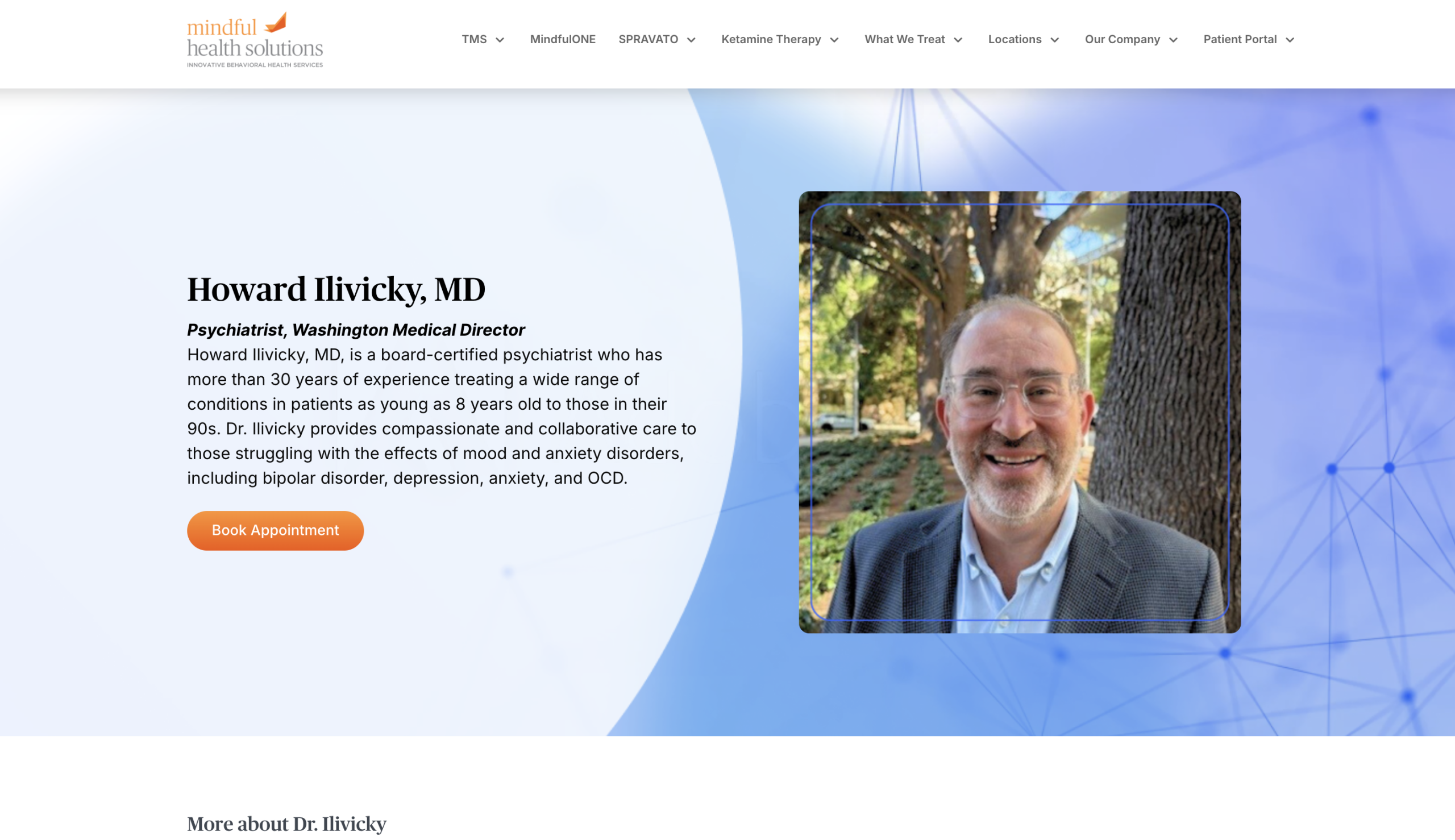
Howard Ilivicky, MD
Psychiatrist
Washington Medical Director
+ Learn More

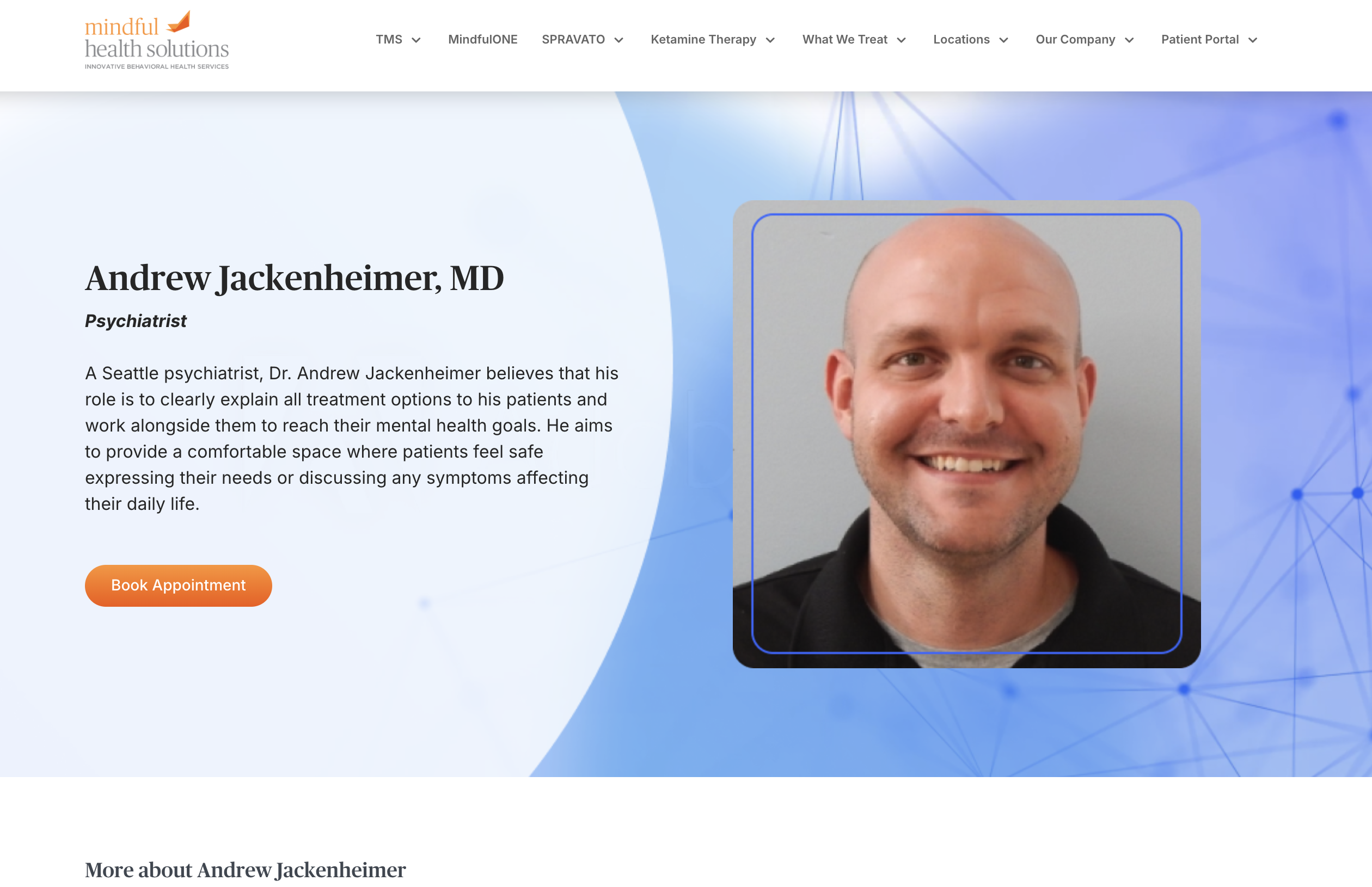
Andrew Jackenheimer, MD
Psychiatrist
+ Learn More

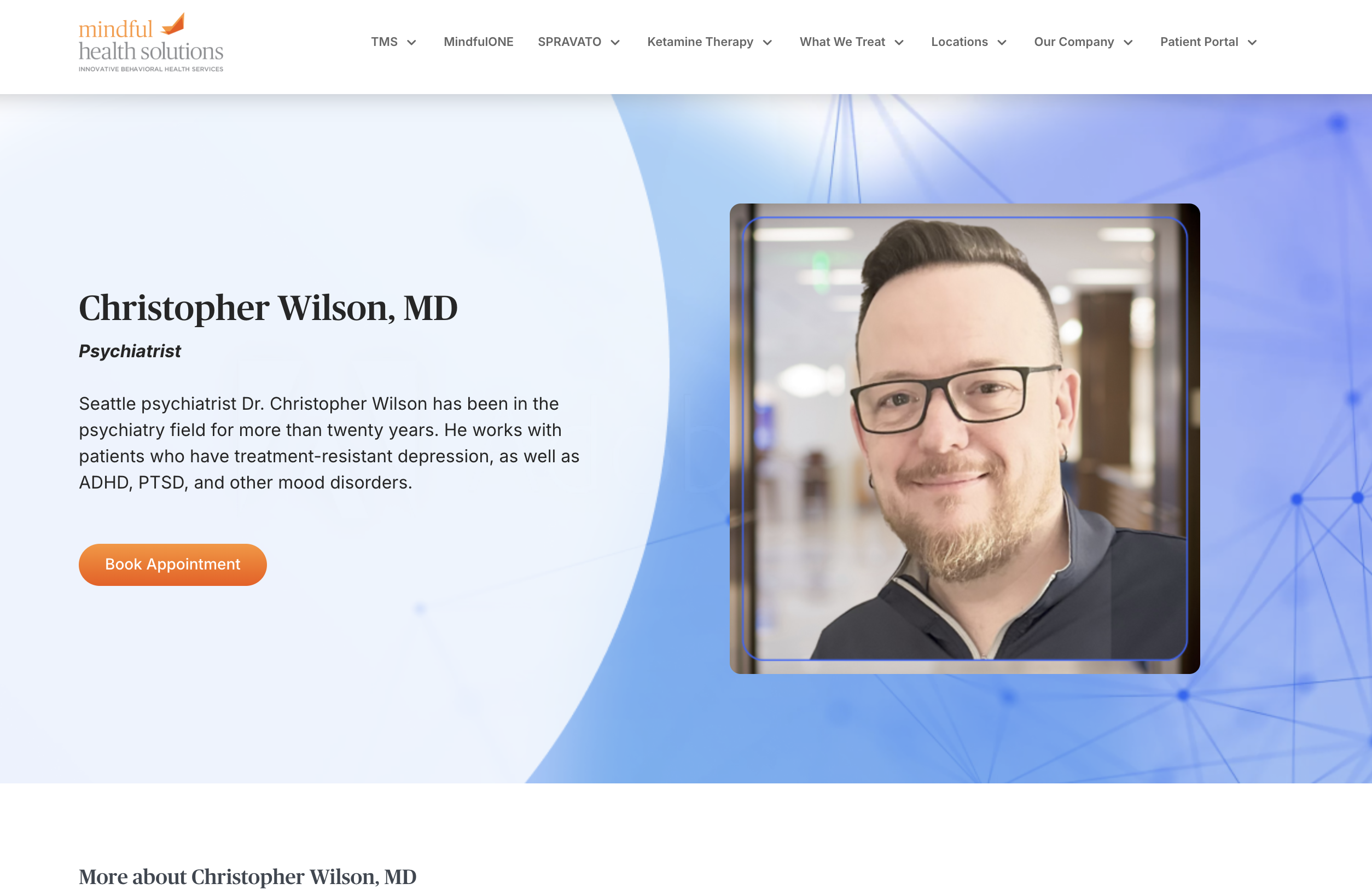
Christopher Wilson, MD
Psychiatrist
+ Learn More

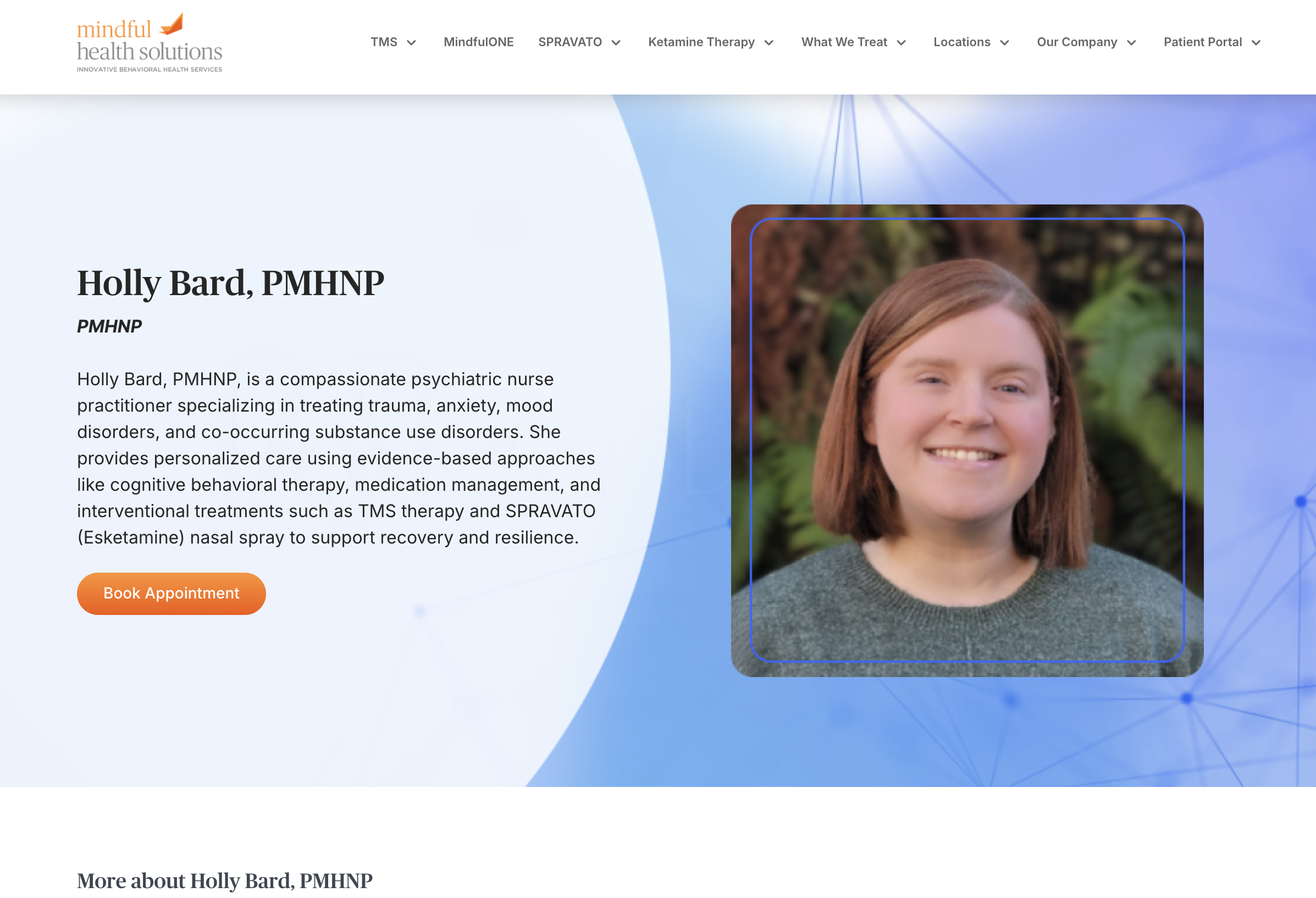
Holly Bard, PMHNP
PMHNP
+ Learn More
Parking
Parking for our Seattle mental health clinic is free, with ample spaces available in the large lot, including handicap parking. Note that registration is required and is valid for 4 hours.
Upon arrival, locate the “115 North” label posted at the top of the front doors. The buildings in our business park are labeled similarly to one another, and we want to help ensure you end up in the right place!
Hours of Operation
Monday – Friday, 8am – 5pm
Saturday – Sunday, Closed
Mindful Health Solutions
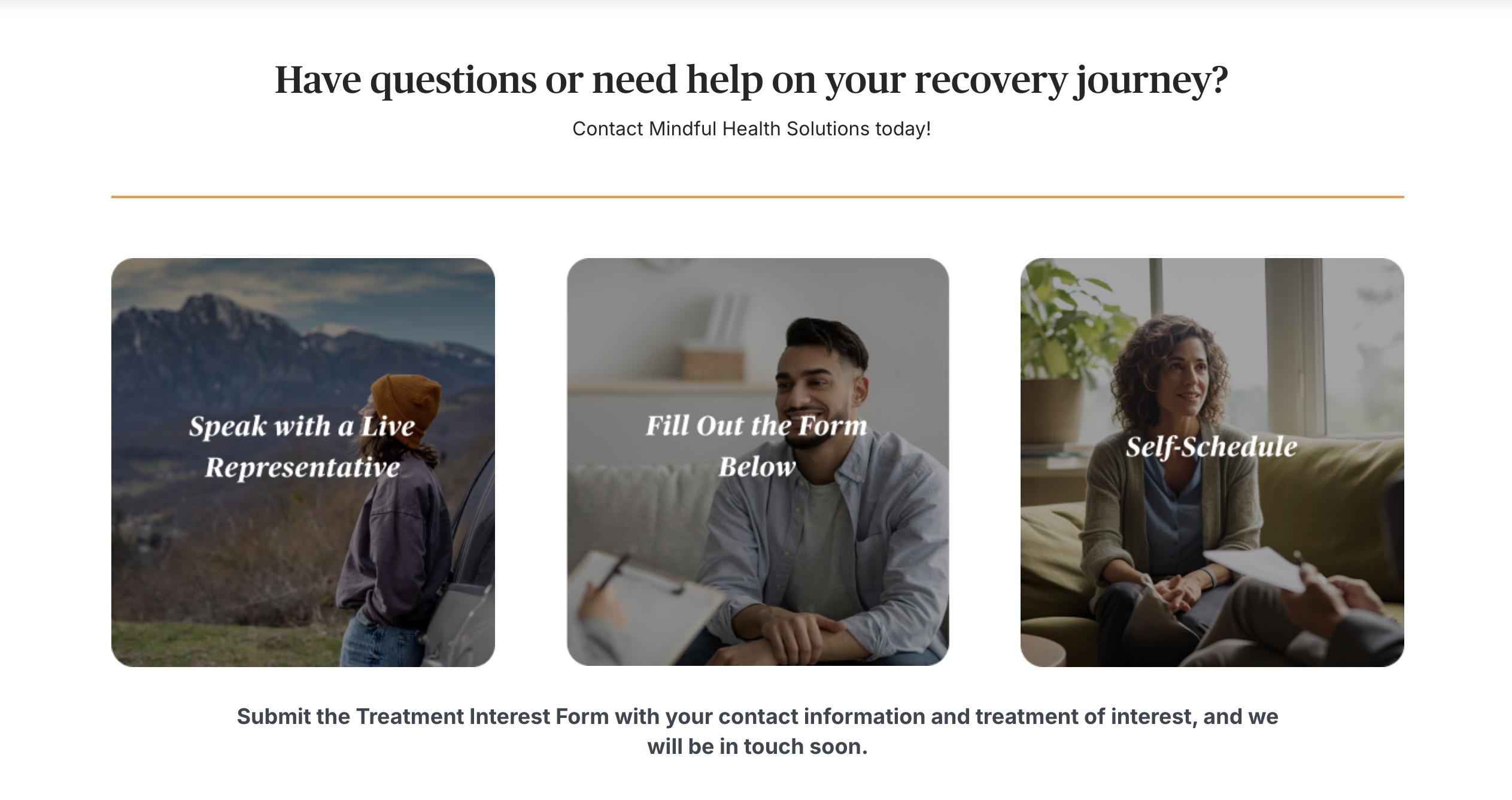
Book Your Initial Consultation
The first step on your healing journey starts here. Our Seattle mental health clinic helps you navigate struggles with depression, anxiety, and other disorders through TMS therapy, MindfulONE, SPRAVATO nasal spray, medication management, and telehealth services.
Fill out the form or contact our Patient Access Team at 425.522.8520 to schedule an appointment for SPRAVATO or TMS therapy in Seattle. We are here to discuss your concerns, go over treatment options, review insurance coverage, and answer any other questions you have. Note that both in-clinic and virtual appointments are available with our psychiatrists in Seattle.
How TMS Changes Lives
What We Treat
How We Help
Frequently Asked Questions
- Depression FAQs
- TMS FAQs
- Accelerated TMS FAQs
- MindfulONE™ FAQs
- Esketamine FAQs
- Ketamine Infusion FAQs
- Telehealth FAQs
- Cost & Insurance FAQs
How can I tell if I’m depressed?
Depression can be debilitating, and early diagnosis is important. Ask yourself:
- Has my sleep, appetite, or energy changed?
- Am I avoiding social interactions or losing interest in hobbies?
- Do I feel agitated, tearful, or hopeless most days?
- Have I engaged in risky behaviors or self-harm?
If these resonate with you, reach out today for professional help. Early treatment increases the chances of remission and long-term well-being.
![]()
What are the symptoms of depression?
Depression can cause persistent sadness, fatigue, loss of interest, and difficulty concentrating. You may be experiencing clinical or major depression if you:
- Struggle with low energy, poor sleep, or appetite changes
- Feel overwhelmed, hopeless, or easily agitated
- Withdraw from social interactions or hobbies
- Experience suicidal thoughts or self-harm
If these symptoms impact your daily life, reach out today for professional support.
![]()
How can I tell if my teen is depressed?
If you suspect your teenager is struggling with depression, it’s important to know what symptoms to watch out for and when to reach out for help. Signs of adolescent depression include:
- Changes in sleep, appetite, energy, or motivation
- Withdrawal from social activities, family, or school
- Increased sadness, irritability, or risky behaviors
- Loss of interest in hobbies
What Is TMS Therapy?
TMS (Transcranial Magnetic Stimulation) is a non-invasive, FDA-approved treatment for depression and other mental health conditions that uses magnetic pulses to stimulate specific areas of the brain. These pulses stimulate the brain’s prefrontal cortex, which regulates mood. Unlike medications, TMS doesn’t travel through the bloodstream and has fewer side effects. It’s a well-tolerated option for those who haven’t responded to antidepressants or prefer a drug-free treatment.
TMS has minimal side effects compared to traditional medications and can be a great option for patients concerned about drug interactions or unwanted side effects. While it is primarily used for treatment-resistant depression, research shows TMS can also help with symptoms of anxiety, OCD, PTSD, migraines, and more.
![]()
How does TMS work?
TMS delivers localized electromagnetic pulses to the brain, stimulating the prefrontal cortex, which is responsible for mood regulation, and promoting neurotransmitter release. Magnetic pulses activate neurons, helping to restore neurotransmitter balance (such as serotonin and dopamine). This can relieve depression symptoms long-term, unlike antidepressants, which only work while in the bloodstream.
What happens in a session?
- You’ll sit in a comfortable chair while a TMS coil is placed on your head.
- The device sends painless magnetic pulses to stimulate brain activity.
- Magnetic pulses target dysregulated brain areas to enhance cognitive function.
- You can watch TV, listen to music, or talk during treatment.
- Sessions last 20–30 minutes, 5 days a week for 4–6 weeks.
- Cognitive abilities are tested before and after treatment to measure progress.
- No sedation or downtime—patients can drive home and resume normal activities.
This combined approach may help improve memory, focus, and processing speed beyond what medications alone can achieve.
![]()
Is TMS safe? Are there any side effects of TMS?
Yes, TMS is safe, FDA-approved, and has been used in millions of treatments for TMS and even OCD (Brainsway in 2018, MagVenture in 2020). It does not require anesthesia, sedation, or recovery time, and results in fewer side effects than medications.
Common, mild and temporary side effects of TMS typically subside within the first two weeks and may include:
- Headaches
- Scalp discomfort
- Lightheadedness
- Facial twitching (temporary)
Rare but serious side effects:
- Seizures (extremely rare)
- Hearing sensitivity (due to treatment noise/clicking sound)
- Mania (mainly in those with bipolar disorder)
Most patients resume daily activities immediately and may even experience improved energy and focus after treatment.
![]()
Does TMS therapy hurt?
TMS is not painful, but some patients feel mild scalp discomfort or headaches at first. These usually fade after one to two weeks. There are no cognitive side effects, and you can drive and resume daily activities after treatment.
![]()
How will I feel after TMS treatment?
Most patients feel normal after treatment. Some report:
- More energy and better focus
- Less distress from obsessive thoughts
- A better ability to resist compulsions
- A mild headache or tiredness, which usually fades quickly.
![]()
Will TMS affect my current medications?
TMS treatments do not directly impact medications, but as symptoms improve, some patients may reduce or discontinue antidepressants under medical supervision.
If you ARE on medication, your provider will decide whether to continue or adjust it. If you are NOT taking medication, TMS can be a standalone treatment or part of a combined approach.
Each treatment plan is personalized to fit your needs. Your doctor will monitor your progress and adjust your treatment plan as needed.
![]()
What are the success rates of TMS?
Transcranial Magnetic Stimulation (TMS) has been shown to be more effective than antidepressants for many patients:
- 50% of patientsexperience a significant reduction in symptoms.
- 30–33% achieve full remission, meaning symptoms completely disappear.
- Many patients start feeling better after 2–3 weeks, with full results after 6 weeks.
Unlike antidepressants, which must be taken continuously, TMS treatments provide long-lasting relief without the side effects of medication.
![]()
How is TMS different from ECT?
ECT vs TMS – it’s important to know that these are not the same! TMS is a non-invasive outpatient option with fewer risks, making it a preferred choice for many individuals. While both TMS and ECT are brain stimulation treatments for depression, they work very differently:
- ECTuses an electrical current to induce a controlled seizure, requiring general anesthesia in a hospital. It’s typically used for severe, life-threatening depression and can cause memory loss.
- TMSuses magnetic fields to stimulate a specific brain area without inducing seizures or requiring anesthesia. It has minimal side effects, and patients can resume daily activities immediately.
![]()
Can TMS work for OCD?
TMS (Transcranial Magnetic Stimulation) is a safe, non-invasive, FDA-approved treatment for OCD. It uses magnetic pulses to stimulate brain areas involved in OCD symptoms, helping to reduce obsessions and compulsions. It may be an options for:
- Patients who haven’t responded to medication or therapy
- Those seeking a drug-free treatment with fewer side effects
- People looking to enhance the effectiveness of their current treatment
TMS doesn’t “erase” OCD, but can help quiet intrusive thoughts and make compulsions easier to resist. It may also be combined with medication or therapy for better results.
![]()
How does TMS compare to other OCD treatments?
The gold standard treatments for OCD are:
- Medications (Serotonin Reuptake Inhibitors – SRIs)
- Exposure-Response Prevention (ERP) Therapy
These methods don’t work for every person, however. TMS often works faster than OCD medications, with success rates that include:
- 30% of patients see a significant (30% or greater) improvement in symptoms.
- 50% to 60% report at least a 20% reduction in OCD symptoms.
![]()
Can adolescents benefit from TMS?
TMS (Transcranial Magnetic Stimulation) is a non-invasive, medication-free treatment for depression and other mental health conditions. It can be a treatment option for adolescents, typically ages 15 and older, who:
- Haven’t responded to medications or therapy
- Experience severe medication side effects
- Want a safe, effective alternative to traditional treatments
While not yet FDA-approved for adolescents, studies show it is safe and effective for teens.
![]()
Is TMS better than antidepressants for adolescent depression?
Only two antidepressants are FDA-approved for adolescents, and responses to these medications can be inconsistent. Adolescents also have a higher risk of side effects, including:
- Increased suicidal thoughts
- Long-term weight gain
- Insomnia
TMS offers comparable or better results with fewer side effects. It also works faster than antidepressants, offering symptom relief within two to three weeks.
![]()
Can TMS be used for memory disorders and related issues?
Research shows that TMS may help slow the progression of cognitive decline and enhance brain function in those at risk for advanced dementia. At Mindful Health Solutions, we are committed to providing compassionate, cutting-edge care to help patients navigate cognitive disorders like:
- Mild Cognitive Impairment (MCI)—a stage between normal aging and mild dementia
- Mild dementia—patients experiencing memory loss but still managing daily activities
- Early-stage Alzheimer’s disease (not yet FDA-approved in the U.S. but approved in Europe)
![]()
Is TMS better than medications for patients with cognitive decline?
While medications may slow cognitive decline, they often come with side effects and potential drug interactions. TMS therapy provides a drug-free alternative with promising results:
- No drug-to-drug interactions—safe for patients on multiple medications
- No systemic side effects like those seen with traditional dementia medications
- Patients show cognitive improvement, rather than just slowing decline
- Studies show ADAS-COG scores improved by 3–4 points for MCI and dementia, an indicator of better cognitive function
TMS may be an excellent option for patients seeking alternatives to medication or wanting to enhance cognitive function alongside traditional therapies.
What is Accelerated TMS Therapy?
Accelerated TMS for depression is a treatment that delivers multiple TMS sessions in one day in order to both lessen the logistical burden on patients to complete a full TMS course (time and distance to clinic) as well as potentially shorten the time to TMS treatment response.
Accelerated TMS is still considered experimental and is not currently FDA approved, although research is ongoing, and the evidence base for its use clinically continues to grow.
![]()
How many Accelerated TMS treatments per day are ideal?
There is no current set “standard” for how many Accelerated TMS treatments in one day is optimal. Existing evidence supports protocols ranging from 2 to 10 treatments per day (for a total of 30 treatments), although more research is needed to fully compare across treatment frequencies and protocols. Each individual treatment lasts 3 to 6 minutes of actual stimulation time.
![]()
How long is the accelerated treatment course?
Great question! As the standard for most Accelerated TMS protocols is 30 treatments, total treatment course duration is determined by how many treatments per day are delivered. For example, an Accelerated TMS course of 2 treatments/day will last 15 days (3 weeks for 30 total treatments), whereas an accelerated course of 10 treatments/day will only last 3 days (for a total of 30 treatments).
![]()
What are some considerations in determining how many treatments/day?
As there is no set optimal accelerated protocol, determining the right number of treatments per day for a specific patient depends on several factors:
- Total treatment course time: More treatments/day will result in a shortened TMS course time. What are the time and distance limitations of the patient? How many days do they have to dedicate to attending clinic to complete TMS?
- Time in clinic: It is important to note that patients must wait 30 minutes between each accelerated treatment in order for the brain to absorb the stimulation and start to make new connections. As a result, treatments are delivered on an hourly basis. Therefore, a “more accelerated” protocol (e.g. 10 treatments/day), while only lasting 3 days, would require a 10-hour in-clinic commitment on those 3 days. Conversely, a “less accelerated” protocol (e.g. 2 treatments/day), lasting 15 days total, would only require 2 hours in clinic on a treatment day.Choosing the correct accelerated protocol is largely a discussion with the patient around the tradeoff of how many days they want to come in versus how long they are able to be in clinic on any treatment day.
- Time to response and efficacy: While this continues to be an active area of research, it is possible that more accelerated protocols mayachieve faster response rates and/or better efficacy than less accelerated protocols, but again more research is needed to fully determine the extent to which this is the case.
![]()
What Accelerated TMS protocols are recommended at Mindful Health Solutions?
We have found that it’s convenient for many patients to complete the full 30-treatment course in 5 days (generally a Monday to Friday commitment), so our most commonly recommended protocol is 6 treatments/day for 5 days and 6 hours total in clinic on each treatment day.
For patients for whom the 6-hour in-clinic time commitment is too high, we have also had success with 3 treatments/day for 10 days (2 weeks total) and 3 hours in clinic on each treatment day.
Lastly, these above protocols are off-label and therefore cash-pay in most cases. For patients with Medicare and other insurance currently covering 2 treatments/day, we have also had patients elect for 2 treatments/day for 15 days (3 weeks) on an in-network basis (payor dependent).
![]()
How well does Accelerated TMS work?
A recent exciting real-world study conducted by Brainsway compared providing TMS treatments 2x, 3x, 5x, or 10x per day for a total of 30 treatments. Treatment course durations varied from 3 to 10 days. All accelerated protocols showed statistically similar benefits: 80% response and 50% remission rates with clinically significant benefits notable by day 3 of treatment in all cases.
These findings show that patients can start to feel relief of their depressive symptoms within days of treatment initiation, a significant improvement over the time course of standard, daily treatment which generally takes 2-3 weeks to see similar effects.
At Mindful Health Solutions, our own real-world outcomes data aligns with the Brainsway study. Analysis of our outcomes – mostly 30 treatments in 5 days as well as some 3 days/week courses as well:
- 82% of patients experienced clinical improvement (at least 5-point improvement in PHQ-9)
- 65% of patients experienced a 50% reduction in symptoms (as measured by PHQ-9 or MADRS)
- 50% of patients experienced total remission of symptoms (as measured by PHQ-9 or MADRS)
These outcomes were measured at the end of the course (5 to 10 days after treatment start depending on treatment protocol).
![]()
What’s the difference between standard and Accelerated TMS?
Standard daily TMS, while safe and highly effective, has several barriers that limit patients’ ability to complete treatment. In particular, the prolonged 36-treatment course delivered daily can put a significant logistical burden on patients who have to travel to the clinic daily for 6 weeks. In addition, patients respond to TMS over a 6-week treatment trajectory, which is slower then some patients may wish to wait to enjoy treatment benefit. Lastly, daily TMS does not work for everyone; new TMS technologies with even better response and remission rates then “standard” TMS are increasingly in demand.
![]()
What is the out-of-pocket cost of Accelerated TMS?
It’s common to ask, how much does Accelerated TMS cost? We’re here to help you understand insurance and out-of-pocket costs before starting Accelerated TMS therapy.
Accelerated TMS currently costs $8,000 for a course of 30 accelerated treatments delivered in whatever frequency is prescribed by the patient’s clinician, in consultation with the patient. Financing options are available.
Some insurance providers (Medicare, Cigna, Aetna) are now covering up to 2 TMS treatments/day.
![]()
What about MindfulONE – how is that different than Accelerated TMS?
MindfulONE is a new Accelerated TMS protocol that condenses 20 TMS treatments into 1 day and is pharmacologically augmented with 2 drugs thought to enhance brain plasticity. While MindfulONE shows substantial early promise as safe and highly effective, we have much less data on the efficacy of MindfulONE as compared to regular Accelerated TMS. Additionally, MindfulONE is only available at our San Francisco clinic currently, whereas we can offer Accelerated TMS across the entire Mindful Health Solutions network.
Overall, MindfulONE may prove to be more effective than regular accelerated TMS protocols, but more research is needed to determine if one is superior to the other. Both treatment modalities shorten the TMS treatment course, appear to speed up time to remission, and are highly effective.
What is accelerated TMS?
Accelerated TMS is a treatment that delivers multiple TMS sessions in one day in order to both lessen the logistical burden course (time and distance to clinic) on patients to complete a full TMS as well as potentially shorten the time to TMS treatment response. Accelerated TMS therapies are still considered experimental and is not currently FDA approved, although research is ongoing, and the evidence base for its use clinically continues to grow.
![]()
What’s the difference between standard and accelerated TMS therapy?
Standard daily TMS, while safe and highly effective, has several barriers that limit patients’ ability to complete treatment. In particular, the prolonged 36-treatment course delivered daily can put a significant logistical burden on patients who have to travel to the clinic daily for 6 weeks. In addition, patients respond to TMS over a 6-week treatment trajectory, which is slower than some patients may wish to wait to enjoy treatment benefit. Lastly, daily TMS does not work for everyone; new TMS technologies with even better response and remission rates then “standard” TMS are increasingly in demand.
![]()
How does MindfulONE work?
MindfulONE™ is a new Accelerated TMS protocol that condenses 20 TMS treatments into 1 day, typically over the course of 9-10 hours, and is pharmacologically augmented with 2 drugs thought to enhance brain plasticity. Overall, MindfulONE™ may prove to be more effective than regular accelerated TMS protocols, but more research is needed to determine if one is superior to the other. Both treatment modalities shorten the TMS treatment course, appear to speed up time to remission, and are highly effective.
![]()
How much does MindfulONE cost?
At Mindful Health Solutions, we understand that cost is an important factor when determining treatment. Total cost for MindfulONE™ is approximately $5,000. We offer flexible payment options from 6-60 months, with or without interest based on the plan. Reach out today to discuss financing for as low as $135 per month.
![]()
Are there any side effects for MindfulONE TMS treatments?
Unlike traditional medications like antidepressants, TMS therapy as a whole has minimal side effects. Some patients may find the headpiece uncomfortable or experience mild headaches during the first few treatments, but these symptoms typically subside within two weeks. Most side effects, such as headaches, fatigue, lightheadedness, scalp discomfort, and facial muscle twitching or tingling, are mild and short-lasting. Serious side effects of repetitive TMS treatments are rare, and our expert providers use their professional knowledge to minimize any risks.
What is esketamine therapy, and how does esketamine work?
What is SPRAVATO, or esketamine, nasal spray for depression? Esketamine is an FDA-approved nasal spray (SPRAVATO) used for Treatment-Resistant Depression (TRD). Unlike traditional antidepressants, which target serotonin, esketamine works by increasing glutamate, improving brain cell communication and mood regulation.
![]()
Why choose esketamine therapy?
There are many benefits to esketamine, or SPRAVATO nasal spray, including:
- Works faster than antidepressants (effects may begin in hours or days)
- Helps patients who haven’t responded to other medications
- Administered in a clinical setting under medical supervision
![]()
Do I qualify for esketamine nasal spray?
Esketamine is recommended for adults with treatment-resistant depression who have:
- Tried at least two antidepressants without success
- Experienced less than a 50% improvement in symptoms after medication and/or therapy
It is also approved for individuals at risk of suicide.
![]()
What does an esketamine treatment session look like?
Esketamine nasal spray for treatment-resistant depression is administered as a nasal spray in a certified clinic. During a session:
- You self-administer the spray under medical supervision
- You remain at the clinic for two hours for monitoring
Most patients receive 12 treatments over two months. Because of possible short-term side effects, you’ll need someone to drive you home after each session.
![]()
Is esketamine safe? Are there any side effects of SPRAVATO?
Esketamine is safe when used as directed, but like any medication, it has potential side effects.
Common, short-term esketamine nasal spray side effects include:
- Sleepiness or dizziness
- Nausea
- Increased blood pressure
- Temporary dissociation (feeling detached)
These effects usually fade within 1–2 hours. Esketamine carries a low risk of dependence, but regular monitoring by a doctor is required.
![]()
How effective is esketamine treatment?
Studies show that esketamine therapy, when combined with an antidepressant*:
- Helps 65% of patients experience relief from depression
- Leads to full remission in 40% of patients
Some patients feel better after just one SPRAVATO therapy session, but most see full results after 12 treatments over two months.
*Mindful Health Solutions Patient Results
How do you feel during IV ketamine for depression treatment?
Wondering, how does ketamine therapy work and how you’ll feel during the infusion? Ketamine infusion treatments are often described as an “out-of-body experience.” Patients may experience dissociation during ketamine infusion therapy for treatment-resistant depression, often reported as a pleasant feeling that relieves symptoms of depression.
Dissociation can include:
- Feeling detached from your body
- Having a distorted perception of time and space
- Experiencing altered perceptions and sensations
- Entering a dream-like state where thoughts may become distorted
- Emotional detachment
Some individuals describe a sense of mental clarity or expanded consciousness during IV ketamine for depression, especially treatment-resistant depression.
![]()
How effective is IV ketamine therapy?
Wondering, how well does ketamine therapy work? Clinical studies show that ketamine infusion therapy for treatment-resistant depression and Major Depressive Disorder has a success rate as high as 70%. Many patients show rapid improvement after just their first or second IV ketamine treatment infusion.
![]()
How are ketamine infusions administered?
Ketamine Infusion Therapy treatments are administered in one of our certified treatment clinics. The session will begin by getting you situated in a comfortable chair and your clinician will get you settled with the IV. Your clinician will inform you when the IV has started. The infusion lasts 40 minutes and the entire session takes about 90 minutes to complete.
![]()
What does a ketamine therapy session look like?
IV ketamine therapy is an office-based, outpatient procedure. The ketamine infusion lasts 40 minutes and the entire session takes about 90 minutes to complete. The session process will begin by getting you situated in a comfortable chair. Then, your clinician will inform you when the IV has started.
The first thing you will feel is a sense of relaxation of mind and/or body. You may then begin to feel slightly light or light-headed. Some people report a sense of feeling a slight warmth. Eventually, you may feel even lighter, almost a slight separation between yourself and your body. Your hands and legs may feel far away. Some people progressively feel more separation between themselves and the different components of consciousness (e.g., their thoughts, feelings, bodily sensations, and perception). Occasionally, people continue to progressively experience an even greater physical sensation of lightness – sometimes to the point of feeling above the room. Patients generally tolerate these sensations very well, reporting the experience as “spiritual” or “pleasurable.”
If someone is struggling with depression, anxiety, or rumination, this point is when they feel much less of and/or distant from these feelings. This experience is frequently described as an immense relief – like the blanket of depression has been temporarily lifted. This experience can also serve as a very hopeful reminder to patients that depression or anxiety does not define them. These conditions are separate from them, and as such, they can be temporary.
In rare cases, patients may have a more negative experience after receiving a ketamine intravenous injection. We have psychiatric professionals on-site to help manage these rare events, which are generally brief and usually resolve completely within 10-15 minutes after stopping the infusion.
Reach out today to learn more about the process during ketamine infusion treatments.
![]()
Are there any side effects of ketamine infusion therapy?
The most common side effects of ketamine usually only occur up to two hours after the ketamine infusion has been administered. To help ensure the safety of patients, there is a two-hour window of supervision at the clinic following the administration before patients can leave and head home.
Although you may not experience any of these IV ketamine side effects, the most common include:
- Double vision
- Loss of appetite
- Dream-like state
- Nausea
- Elevated blood pressure
- Trouble speaking
- Slight pain at the injection site
- Dissociation or feeling strange/loopy
![]()
How many sessions should I expect?
Initial ketamine infusion therapy for treatment-resistant depression consists of 6 IV ketamine treatments over the course of 3 weeks. The details of this protocol are discussed in detail during the initial evaluation. Infusion appointments generally take 90–120 minutes. If the symptoms are successfully controlled with these initial treatments, then follow-up evaluations will be conducted to determine long-term treatment plans.
Maintenance treatments for IV ketamine for depression usually consist of one infusion every 2-4 weeks.
![]()
How much does ketamine therapy cost?
Ketamine Infusion Therapy (KIT) for major depression or other psychiatric indications is $600 per treatment. With the exception of Kaiser insurance, KIT is not eligible for insurance at this time. However, KIT may be eligible for some reimbursement with a Flexible Spending Account (FSA) or Health Savings Account (HSA). Coverage will vary depending on the specific FSA or HSA plan and your health insurance carrier. Therefore, we recommend that you contact your insurance plan before treatment.
Note that the number of IV ketamine infusions may vary per patient, with most patients completing between 6-12 IV ketamine treatments for depression.
What is telepsychiatry?
Telepsychiatry is an area of telemedicine where patients can meet with their care provider on a safe, secure video call. This allows for the convenience of mental health care in the comfort of your own home.
![]()
Do I have to use my desktop computer?
You can use your desktop or laptop, as well as an iPad or a tablet. Or, you can use your smartphone. All of these work for your telepsychiatry appointment.
![]()
Do I need to download anything?
You will need to download the Zoom application from the Zoom website or your app store. It’s easy and only takes a few minutes. If you need assistance or have questions before your appointment, give us a call and we’ll be happy to help you through the process.
![]()
What if my audio doesn’t work?
If your audio isn’t working, we can likely move you to a phone only call.
![]()
Does my insurance cover these appointments?
Yes, most insurance plans cover telemedicine. We’ll do a benefits investigation for you before your appointment to let you know.
![]()
Can I take the appointment from anywhere?
It’s important for you to be in a private, quiet space for your appointment. Try and find a room with minimal distractions. If you need to sit in your car because this offers you the most privacy, that’s fine, but you can’t be in a moving vehicle, and you need to be alone.
Is TMS covered by insurance?
Yes! Most major insurances cover TMS, and we’ll work directly with your insurance provider on your behalf to help you get covered.
Insurance Accepted – Mindful Health Solutions
![]()
Does insurance cover TMS for OCD?
Insurance coverage for TMS and OCD is improving but not guaranteed. Most plans cover TMS for depression, but only some allow TMS adjustments to address OCD if depression is also present. Our team advocates for coverage and will handle the insurance process for you before treatment starts.
![]()
Does insurance cover esketamine nasal spray?
Wondering, how much does esketamine nasal spray cost? We can help answer your financial-related questions.
Insurance coverage for esketamine is expanding, but approval varies. Our team will work directly with your provider to help secure coverage. We also offer out-of-pocket payment options for those without coverage for esketamine therapy.
Insurance Accepted – Mindful Health Solutions
![]()
How much does ketamine therapy cost?
Ketamine Infusion Therapy (KIT) for major depression or other psychiatric indications is $600 per treatment. With the exception of Kaiser insurance, KIT is not eligible for insurance at this time. However, KIT may be eligible for some reimbursement with a Flexible Spending Account (FSA) or Health Savings Account (HSA). Coverage will vary depending on the specific FSA or HSA plan and your health insurance carrier. Therefore, we recommend that you contact your insurance plan before treatment.
Note that the number of IV ketamine infusions may vary per patient, with most patients completing between 6-12 IV ketamine treatments for depression.